


When life threatens to make a cynic of me, when I begin to salivate and dig my claws into that poisonous, low-hanging fruit, I walk out my back door to sit among the towering ponderosa pines for a while. Knees to soil, I exhale like I am blowing out a stubborn birthday candle— loud and forceful, aggressive, even. My palms open and I close my eyes and lift my face in supplication, imagining the bitter, tempting fruit rolling to a stop beside me. Opening my lids again, I say a prayer to the pines’ highest branches, two hundred feet closer to heaven’s grace than I am, willing them to intercede on my behalf. There, in the shadow of beings hundreds of years my elder, the anxious buzzing in my chest begins to settle, and I arrive.
Notice. A voice says. Be still.
I lay down in the dirt, autumn’s dry needles greeting me with equal parts cushion and pin prick, and I commit my full attention to the oldest tree beside me. Hello, I say, reaching out to touch the topography of its bark, the color of cinnamon and heat and charcoal and spice. My gaze travels up to its lowest branches, a tangle of arthritic claws softened by lichen the color of sun-ripened limes, the color of citrus sparkling inside my nose, brightening a world gone gray. Above those dry limbs, the tree’s slick, clustered needles shiver and sway in the sunlight- endless rows of them- and I wonder what it might feel like to dance in the warmth of what feeds me. But I know, of course I know. Inhale, exhale. Stay here.
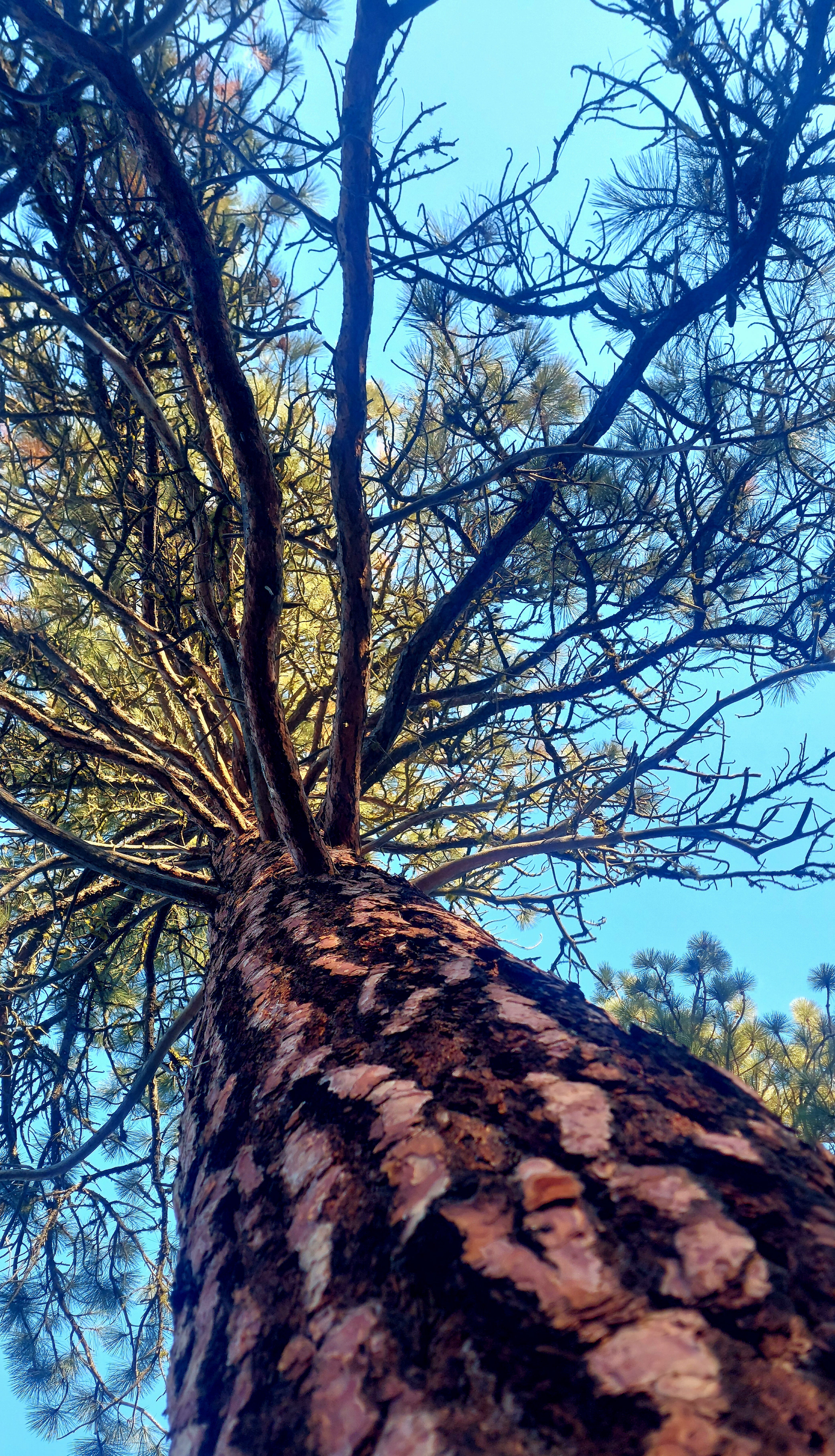
I pick up one of last year’s fallen cones, careful not to prick the pads of my fingers on its hooked spines as I pry them open, finding and then pinching the edge of a seed. I place it in the palm of my hand— a tiny, single-winged thing. How incredible it seems to me, that a being so anchored to the earth begins its life more moth than monolith. I wonder when it landed here— one hundred years ago? Two? Three? — what was happening in the world when it fluttered to this rocky soil, waiting for spring rains to tickle out sprout or root? Had the indigenous people of this valley, the mətx̌ʷu, been forcibly displaced by non-native settlers yet, or were they still tending the land? If I could open the tree like a book, I could try to read its rings for clues. Burn scars, stress, drought— seasonal stories etched in the core of its being, just like mine— but somehow the tree is not bent over by its past as I so often am. Maybe because it is wise enough not to feed its heartwood— the very center of those rings, the bearer of its oldest stories— that part has been dead for many years now, becoming the tree’s most essential support. I would do well to let my own past straighten my spine while no longer giving it my energy.
What would it be like, to be so steady a thing? To let go of comparison, to feel no inadequacy or self-judgement for the way your trunk bows eastward while your kin stand straight as ships’ masts, as plumb as meercats at attention. What would it be like to have entirely non-human awareness, to exist free of ego and existential dread? Trees effortlessly embody the kind of humility I struggle to find. Not the “humility” that I was sold as a child; self-effacement and unworthiness (which are really just the shadow side of unchecked ego; an unhealthy obsession with oneself, worn like a hairshirt). No, the humility of trees, like so much of our non-human kin, is steeped in an unquestioned state of worthiness and belonging. They do not need to prove themselves to the forest. They only need to get on with the sacred task of communal reciprocity.
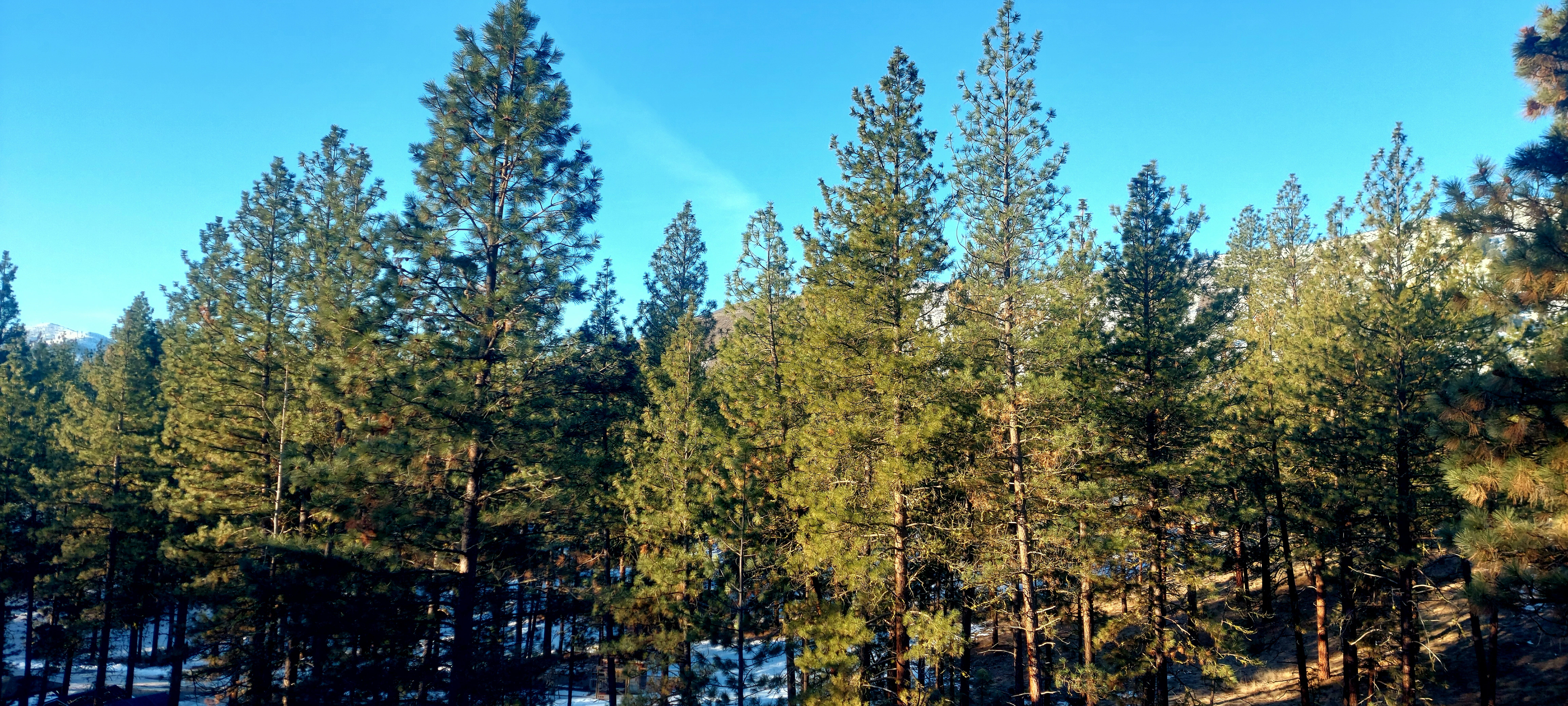
We are not so unalike, this tree and me. We are both cellular beings made of star dust, embraced by a planet that would see us thrive, sitting on this particular sunny slope on an ancient glacial moraine 41 degrees north of the equator, my body expelling oxygen, the tree’s expelling carbon, breathing together in evolutionary harmony. But I often forget that I am a relational being in times of stress and fear— the tree does not suffer this protective amnesia. Perhaps that is what I would ask this tree, if we had a common language beyond breathing: How do you take care of yourself and others when the world feels so dangerous?
I have a penchant for carte blanche mistrust when the world burns around me. People are unsafe, I’ll think, even while loving so many specific ones, hypocrite that I am. Better to remain sealed off. Maybe the tree would tell me about the fungus beneath our bodies as a way of explaining when a thing must open, and when it must close. Maybe this ancient being can cradle my tender heart for a little while.
Look at my roots, it might say, its voice the sound of rumbling boulders and papery bark and wind whisper. Way down deep, in the dark, in the Underland1, one hundred feet below the skin of the earth. See with my eyes, young one. Look at the cocoon around my root tips. Your species calls this ectomycorrhiza— a fungal sheath that provides me with nitrogen and phosphorus from the soil. Look closer now. Burrow inside my roots. Do you see the lacy mycorrhizal labyrinth between my cells? This, you call the Hartig net. This is where the beautiful, vital exchange happens. I receive water and nutrients, and the fungus receives my excess carbon. From there, it reaches ever outward, a braided river of light connecting me to the entire forest.
Is it always so harmonious, this relationship between you and the fungus? I ask, wishing everything was so simple and mutually beneficial as this in the complicated Aboveground.
Mostly, but not always. The tree replies, steadily, without judgement. Sometimes, when there is drought or sunlessness, there is not enough carbon for me to give. Sometimes the soil is so rich with rain that I no longer need the exchange, but the fungus still demands it, and we are at an imbalance. And sometimes the fungi compete with one another and begin to take more than they give.
What then? I ask. What do you do when the energetic exchange is untenable? When the relationship becomes parasitic? How do you remain alive?
I simply respond. Says the tree. I reduce the carbon or entirely senesce the root to preserve my strength until conditions change. And then I test the soil again, and shoot out new roots, and am cocooned once again. If the mycorrhizae give me what I need, I respond in kind.
Is it just transactional, then? I ask, a little despondent, not knowing exactly why.
The tree does not understand this question, or my own sadness in asking it.
Transactional? It asks me gently.
Is it all tit for tat? I ask. Do you only give in accordance with what you receive, and if the exchange is not perfectly mutually beneficial, do you cut it off entirely? I feel heat rising in my chest, my breath shortening, and I begin to extend my fingertips for the bitter fruit again.
Young one, the tree sighs. You speak of withholding as punishment. When I have much to give, I give it freely. Generosity is in my nature. But generosity is not only about giving; it is also about receiving. I am as worthy as any other being in the forest to thrive on this land. Some seasons are seasons of survival, and some seasons are seasons of sharing. I simply adjust my energies based on the intelligence in my cells, the intelligence of the air and the soil. I trust myself and I trust the river of light.
But what if the whole forest is ablaze? What then? The stubborn, frightened child inside of me asks.
The tree does not respond. I allow my heart to settle, listen to the high wind for a while. I think perhaps the tree does not understand “what if.” I turn my head and my eyes land on a nurse log— a tree that fell long ago, for reasons I cannot know. She is rich with moss and lichen and swollen puffball mushrooms that my daughter loves to play with in spring, coming home with fingers stained amber from their spores. A black longhorn beetle waves its long antennae in the sunlight as it walks across her horizontal spine. Two nuthatches hop in and out of her blunt shadow, searching for spring’s first seeds.
Ah, so it has answered me, in its own way.
It seems that even in death, connection is at the core of our being. I stand up, brush the pine needles from my back, and place my hand on the tree one last time, taking inventory of what I have to give, and what I am desperately in need of.
I kick the bitter fruit into the forest. Deep roots, open heart, straight spine.
I am reading Underland: A Deep Time Journey by Robert MacFarlane right now, and friends, I could not love it more.
WHEN I AM AMONG THE TREES
by Mary Oliver
When I am among the trees,
especially the willows and the honey locust,
equally the beech, the oaks and the pines,
they give off such hints of gladness.
I would almost say that they save me, and daily.
I am so distant from the hope of myself,
in which I have goodness, and discernment,
and never hurry through the world
but walk slowly, and bow often.
Around me the trees stir in their leaves
and call out, “Stay awhile.”
The light flows from their branches.
And they call again, “It’s simple,” they say,
“and you too have come
into the world to do this, to go easy, to be filled
with light, and to shine.”
This entire writing resonated with me like magic. Beautiful, heartening. Such wonderful feels from your delightful words. I am, for now, at peace.